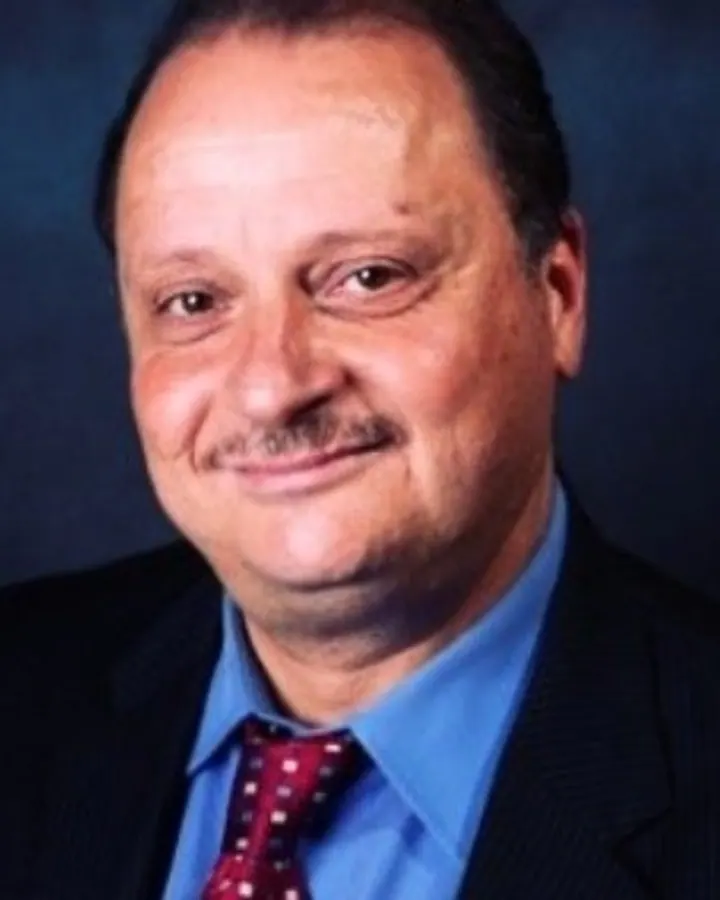
Jamal Dajani
Influential media and communications expert
- Born
- 1957
- Born in
- Jerusalem, Palestine
Why Jamal is here
Renowned for his impactful work in media, promoting Palestinian narratives and rights through innovative journalism and strategic communications.
Their story
Jamal Dajani is a Palestinian-American journalist, producer, and media development expert known for his work in promoting Palestinian narratives and issues through various media platforms. He has served as the Director of Strategic Communications and Media for the Palestinian Prime Minister and is the co-founder of Arab Talk Radio. Dajani has produced award-winning programs that highlight Middle Eastern news and perspectives, making significant contributions to the representation of Palestinians in global media.
Milestones
The moments that shaped Jamal’s path.
Graduated from Columbia University
Earned a B.A. in Political Science, providing a foundation for his career in media and communications.
Co-Founded Arab Talk Radio
Launched this platform to provide a voice for Arab and Palestinian issues in the media, reaching a broad audience with discussions and interviews.
2001-2009
Produced "Mosaic
World News from the Middle East" (2001-2009): This program won a Peabody Award for excellence in broadcasting, offering unfiltered news from the Middle East and raising awareness about Palestinian issues.
2015-2017
Served as Director of Strategic Communications for Palestinian PM
Worked under Prime Minister Rami Hamdallah, enhancing the media strategy and global communication efforts of the Palestinian government.
Active Role in Community Organizations
Held leadership positions in various community organizations, including the San Francisco Immigrant Rights Commission and the Arab Cultural and Community Center, promoting Palestinian culture and rights.
Legacy
What they built, changed and left behind.
Enhancing Palestinian Media Representation
Through his work with Arab Talk Radio and "Mosaic," Dajani has significantly improved the representation of Palestinian voices and issues in the media, providing alternative narratives to mainstream coverage.
Strategic Communications for Palestinian Government
As the Director of Strategic Communications and Media for the Palestinian Prime Minister, Dajani played a key role in shaping the global media strategy of the Palestinian Authority, effectively communicating Palestinian perspectives to international audiences.
Award-Winning Journalist
His production of "Mosaic: World News from the Middle East" earned critical acclaim and several awards, highlighting important news from the Middle East, including Palestinian issues, to a global audience.
WatchEducational Outreach
As a lecturer at San Francisco State University, Dajani educates students on Arab media and the portrayal of Middle Eastern issues, fostering a deeper understanding of Palestinian narratives and media literacy.
Community Leadership
Through his roles in various community organizations, Dajani has worked tirelessly to support and advocate for Palestinian communities, ensuring their stories and struggles are heard and addressed in broader social and political contexts.
Ask about Jamal
Curious about something? An AI guide answers from Jamal’s profile.
Jamal’s guide AI
Answers come from Jamal’s profile on this page. It isn’t Jamal, and it can make mistakes.
What would you like to know about Jamal?
Ask in your own words about Jamal’s early life, work, the moments that shaped them, or their legacy. The guide answers only from this profile, so if something isn’t covered, it will tell you.
AI-generated from this profile. Spotted something wrong? Suggest an addition.
Watch
Jamal in interviews, talks and coverage.
01Award-Winning Journalist↗
Spot a mistake?
We check every correction against sources before we change a profile. Tell us what’s wrong with Jamal’s story and, if you can, where you read it. How we check
Keep exploring
More faces from Palestinian Americans
 Palestinian Americansb. 1956
Hanna Eady
Influential Palestinian Playwright
Buqu'ya, Upper Galilee, Palestine
Read their story Palestinian Americansb. 1958
Sami Al-Arian
Defiant Voice for Civil Rights
Kuwait
Read their story Palestinian Americansb. 1956
Yousef Khanfar
Renowned photographer, author, and humanitarian
Kuwait
Read their story Palestinian Americansb. 1955
Dr. Reyad Sawafta
Pioneer in Nanotechnology
Village of Bardala, Tubas, Palestine
Read their story