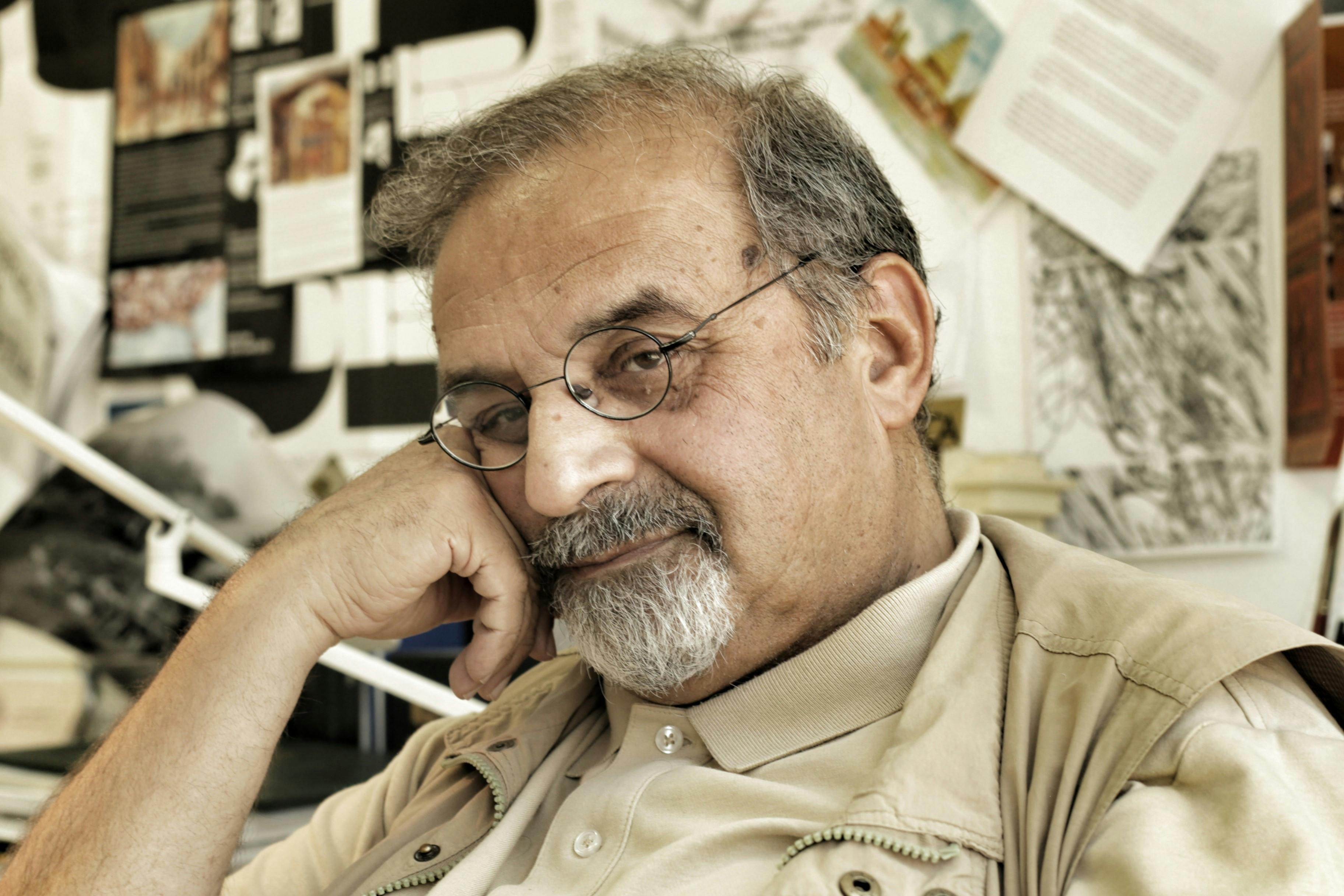
Rasem Badran
Pioneer of Modern Islamic Architecture
- Born
- 1945
- Born in
- Jerusalem, Palestine
- Path
- Architecture
Why Rasem is here
Rasem Badran is celebrated for his pivotal role in shaping modern Islamic architecture. His work, blending traditional elements with contemporary designs, has significantly influenced architectural practices in the Middle East and beyond.
Their story
Rasem Badran, born into an artistic family in Jerusalem, grew into a prominent architect who profoundly impacted Islamic architecture. He completed his education in Germany and quickly gained international recognition for his unique approach to design, which harmoniously integrates cultural heritage with modern architectural practices.
Milestones
The moments that shaped Rasem’s path.
1969
Graduated with a bachelor’s degree in architecture from Technische Universität Darmstadt, Germany.
1973
Returned to Jordan and began working on significant projects in the Middle East.
1982
Won the Baghdad Grand Mosque competition, marking a significant milestone in his career.
1995
Received the Aga Khan Award for Islamic Architecture for the Grand Mosque of Riyadh and the redevelopment of Riyadh’s old city center.
2002
Received an honorary doctorate from Jordan University of Science and Technology.
Legacy
What they built, changed and left behind.
Baghdad Grand Mosque
A landmark project that significantly propelled his career in the Middle East.
WatchGrand Mosque of Riyadh
An iconic project in Saudi Arabia that earned him the Aga Khan Award.
King Abdul Aziz Historic Center in Riyadh
A significant cultural project in Saudi Arabia.
Al-Bujeiri Development in Riyadh
A major urban development project.
Abu Dhabi Court House Complex
A prominent architectural project in the UAE.
Ask about Rasem
Curious about something? An AI guide answers from Rasem’s profile.
Rasem’s guide AI
Answers come from Rasem’s profile on this page. It isn’t Rasem, and it can make mistakes.
What would you like to know about Rasem?
Ask in your own words about Rasem’s early life, work, the moments that shaped them, or their legacy. The guide answers only from this profile, so if something isn’t covered, it will tell you.
AI-generated from this profile. Spotted something wrong? Suggest an addition.
Watch
Rasem in interviews, talks and coverage.
01Baghdad Grand Mosque↗
Spot a mistake?
We check every correction against sources before we change a profile. Tell us what’s wrong with Rasem’s story and, if you can, where you read it. How we check
Keep exploring
More faces from Architecture
 Architectureb. 1947
Shadia Touqan
Distinguished Architect and Heritage Preservationist
Read their story Architectureb. 1942
Khaled Nashef
Influential Palestinian archaeologist and historian
Tulkarem, Palestine
Read their story Architectureb. 1948
Omar Yousef
Influential architect & academic
Read their story Architectureb. 1952
Bilal Hammad
Innovative Architect, Urban Activist, Educator
Nablus, Palestine
Read their story